
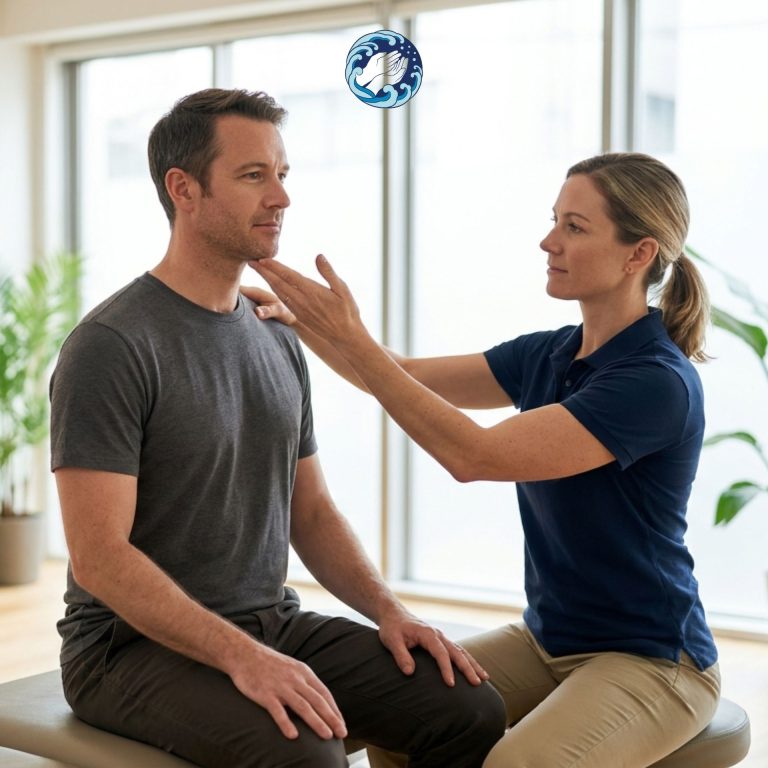
Posture rarely remains a set position. It is an ever-evolving series of compensations that occur while completing regular activities like work, public transportation, stress relief, rest, and exercise. Fixating on an end position or a single set of instructions usually creates greater tension. The best results will come from both rehabilitation and a posture-friendly setting. To ease the stress, some people might need to look for alternative solutions.
While many individuals are offered the general advice of sitting up straight, the advice does not consider the physiology of upright locomotion. Humans are designed with spinal curvature that distributes compressive forces while allowing the body to maintain balance. Sitting creates torque, which can only be countered by producing an equal force around the body. Fixating the spine in one position causes greater tension on the intervertebral discs because the entire load must be supported by the musculature without the aid of spinal curvature.
Activities such as working at a desk, commuting via trains, stress, and a lack of exercise usually dictate the manner in which the body is placed. Forward head posture and kyphotic deformity often arise when spending long hours working. Hip flexor tightness, along with the reduction of deep neck flexor and gluteal muscle activity, then becomes apparent.
Sleep and exercise: Forward head and torso rotation while sleeping, restricted hip abduction and thoracic rotation, lumbar flexion, knee hyperextension, hip flexor tightness, lower gluteal muscle inactivity, pectoralis and hip flexor overactivity
Exercising at a gym can also contribute to developing poor posture. Many individuals who spend the majority of their time at a desk can display similar compensations during exercise. Weight machines are not intended to replace free weights. Isolation exercises should not be prioritized before building strength in the major movement patterns.
Generally, there are multiple compensations that arise when practicing poor posture, although many do not feel significant. If several positions begin to irritate or cause discomfort, it may be time to adjust your regular movements. Listed below are a few indicators that suggest an individual requires one-on-one rehabilitation.
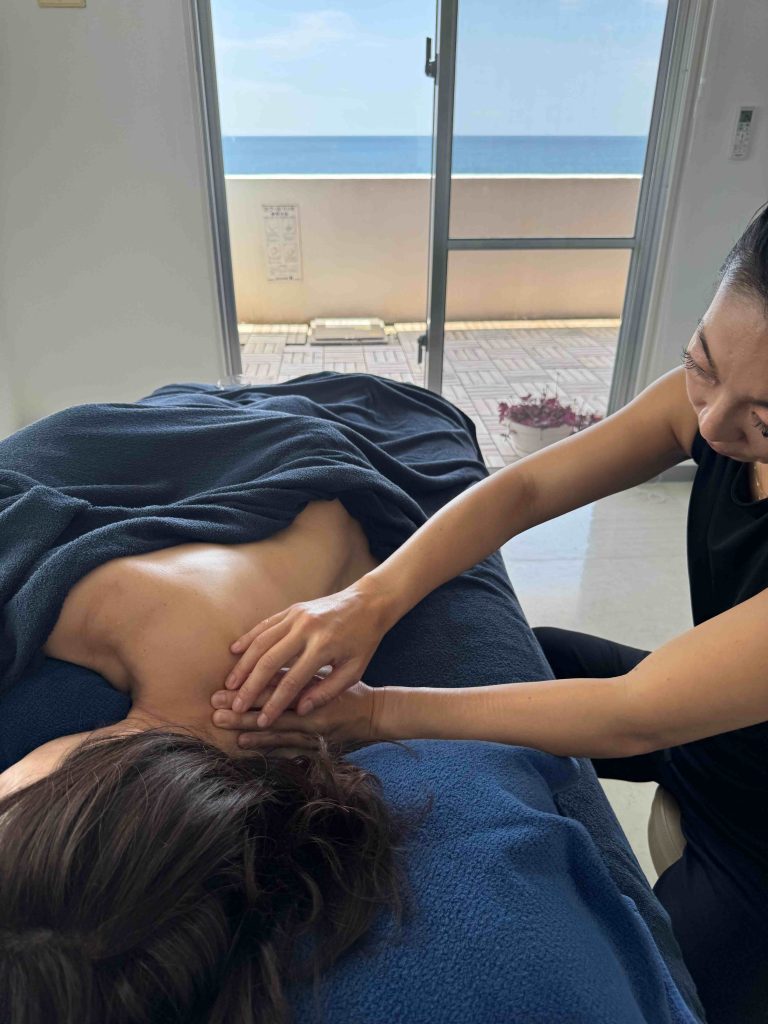
A five-part series has been created to help individuals improve movement in the thoracic area, neck rotation, hip and pectoralis muscle stretching, and hip and gluteal muscle strengthening. The following set of recommended ranges of motion should complete five exercises on a regular basis or as needed during the course of the day.
Target: Mobility; Repetitions: 8 to 10 Sets of 2-Second Holds
Office chair thoracic extension stretches the tissues on the mid-back while strengthening stabilizing muscles. Seated at a desk with the back of the chair placed against the mid-back. Place the hands at the lower neck or upper back. Inhale and extend the upper spine down and backwards. The lower ribs are drawn downwards, and the back of the head moves slightly over the middle back. Exhale and return to neutral.
The suggested dose is 8 to 10 sets of 2-second holds.
Target: Mobility, Repetitions: 2 Sets of 8 to 10 Repetitions
Chin tucks with neck retractions correct forward head posture while strengthening the deep neck flexors. Stand tall or sit with the back straight ahead while looking straight forward. Position two fingers on the chin. Retract the chin as if trying to create a double chin without dropping the head downward. A slight stretch should be felt on the back of the neck just below the base of the head. No forward or backward tucking is required. The chin is tucked towards the chest to attain the full range of motion. The recommended range of motion holds for 3 to 5 seconds before reversing the movement.
The suggested dose is 2 sets or 8 to 10 repetitions.
Target: Hip Flexibility; Dose Recommendation: 30-Second Holds Per Side
The Half Kneeling Hip Flexor Stretch is an excellent mobilization procedure designed to help relieve hip flexor and lower back tightness. Begin by kneeling on one knee with the thigh slightly bent and the opposite foot resting in front of the body while also slightly bent. Both knees should form a right angle. Pull the hips forward by contracting the core musculature, and the hip on the kneeling side should feel tight. Adjust body position until the stretch is intense enough to be useful in the current posture.
The suggested dose is 30-Second Holds Per Sides and can be repeated twice.
Target: Muscle Stretch; Dose Recommendation: 30-Second Holds Per Side
Doorway Pectoralis Stretch utilizes everyday objects to help increase a range of motion. Standing in a doorway, place the forearms on the doorframe with the elbows at a right angle. The doorway creates a wall for the chest muscles as the individual slowly steps in until a stretching sensation is felt. The individual should never rotate the thorax or extend the lower back.
The suggested dose is 30-Second Holds Per Side. The recommendation also suggests repeating the stretch while raising the elbows.
Target: Strength; Dose Recommendation: 2 Sets of 10 to 12 Repetitions
A pelvic bridge and hold strengthen the posterior chain of the body, which has been shown to relieve discomfort in various conditions. Lie on the back with the knees slightly bent so that the feet are hip-width apart and facing forward. Upon exhaling, raise the hip until an imaginary line passes through the knees and shoulders. Hold the bridge position for the recommended two seconds and contract the glutes. Upon inhaling, the bridge then slowly lowers back down to the floor.
The suggested dose is 2 sets of 10 to 12 repetitions.
Having an ergonomic environment is a vital aspect because it will reduce the need to sustain poor posture. Below are suggestions that should be considered when preparing an ergonomic workspace.
Monitor positioning: The top of the monitor should be below or at eye level and a little further than arm’s length away.
Chair positioning: Feet must be planted firmly on the ground with knees bent between 90 degrees and 120 degrees. The seat height should allow the lower back to remain against the chair.
Position of the keyboard and mouse: The keyboard will be placed close enough to the body to ensure the elbows are slightly bent. Similar positioning would be required for the mouse.
Movement: Using flexible furniture and standing up and sitting down every hour to promote movement.
At-home regimens and ergonomic settings have demonstrated the ability to relieve discomfort by altering the musculoskeletal system. The individual can sustain changes in the musculoskeletal performance by utilizing a comprehensive series of physical rehabilitation.
If the discomfort persists over four to six weeks, it is suggested to visit a physical therapist. An individual should also visit a medical professional if discomfort moves down the limbs, preventing them from completing everyday activities. The presence of tingling and numbness can be a symptom of a more serious condition. Pain and restricted movement can severely limit an individual’s ability to move, and in rare cases, the pain may be continuous.
Physical rehabilitation usually involves a detailed movement analysis and individualized therapeutic intervention to help the individual restore normal function. There are five major benefits that are experienced when completing physical rehabilitation with a medical professional to improve range of motion and strengthen problem areas.
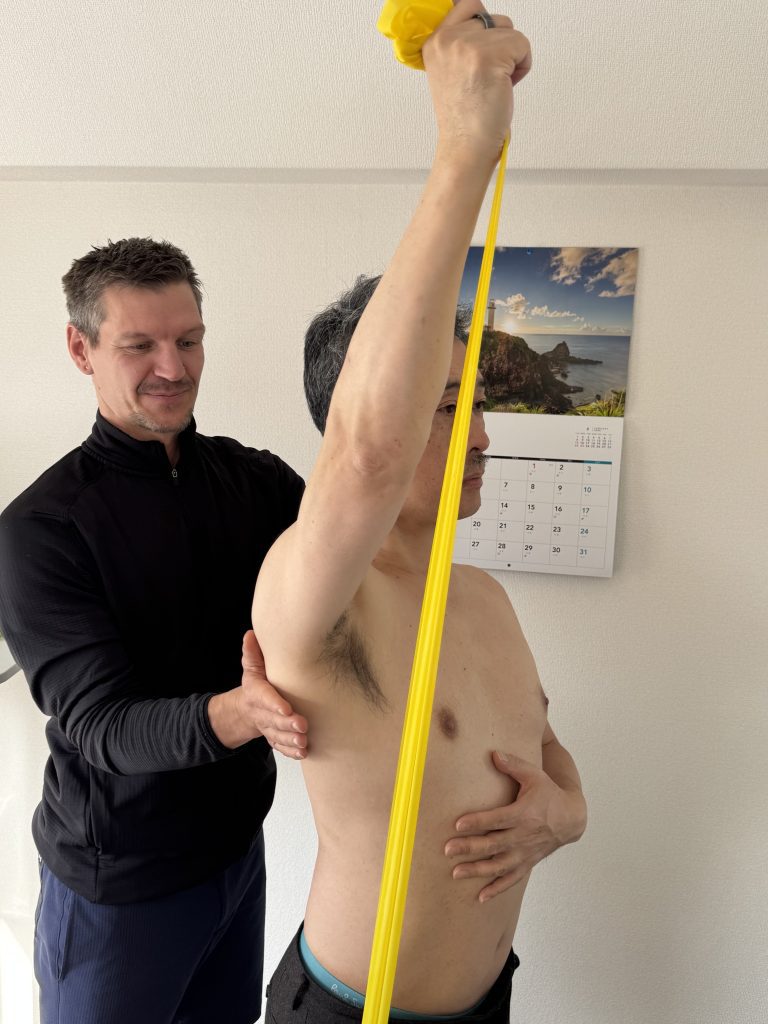
Movement analysis provides a baseline of compensation patterns.
Specialized Care: Individualized treatment plans created during one-on-one meetings with a physical therapist.
Manual therapy and dry needling: Manual therapy and dry needling can help reduce discomfort and aid the healing process.
Joint mobilization and manipulation: Manual treatments to address joint limitations and impairments.
Exercise prescription and recovery: Therapeutic exercise regimes and personalized recommendations for a return to the usual activities.
A medical professional can help devise a program that fits the individual’s needs for them to develop a stronger, healthier working environment.
Poor posture will usually improve when the individual avoids or adjusts activities that are causing the discomfort. Range of motion exercises should complement activities to ensure no activity produces discomfort. Listed below are a few of the commonly asked questions and answers to help guide you in your endeavor to alter poor posture.
How long does it take to correct bad posture?
Mild discomfort can usually be felt within a fortnight, and the discomfort from muscular tension usually reduces after eight to twelve weeks of range of motion activities.
Can poor posture cause tension headaches and neck discomfort?
Yes, forward head posture can reduce strength and increase activity in the upper trapezius and levator scapulae muscles, and it may predispose an individual to tension-type headaches that radiate across the head, temples, or back of the eyes.
Are standing desks better for spinal health than sitting desks?
Neither sitting nor standing is recommended when performed continuously when isolated without breaks. The best posture requires regular movement.
What sleeping posture helps maintain good posture?
The sleeping position should help maintain good posture while still being comfortable. Usually, sleeping on one’s back with a pillow beneath the neck and knees while supported by the bed is helpful for posture. Side sleeping with a pillow between the legs and supported by the pillow to maintain a neutral position for the neck is also helpful. Avoiding sleep on one’s stomach should be avoided since the cervical spine rotates for prolonged time on one side.
Can I self-treat poor posture?
Self-treatment methods may reduce poor posture symptoms but not necessarily address mechanical impairments. If the individual does not see improvement, or pain occurs persistently in the muscles and joints, they should visit a physical therapist for an individual evaluation.
Enhancing posture is an ongoing process that involves becoming aware of your movements, building your postural muscles, and maintaining consistency in your daily activities. Rather than restricting your movement based on typical alignment cues, you can reduce your everyday discomfort and create long-term changes to your spine health.
Should these home remedies not offer you the relief you’re looking for, why not reach out to a medical professional and treat your spine to some TLC?
Our licensed physical therapists,will provide professional advice, manual therapy, and individual movement tutorials to allow you to take control of your health and eliminate the root of your pain and dysfunction.
Founded by Mari Gish, PT, Tokyo Rehabilitation has served the English-speaking community in Japan for over 40 years. With state-of-the-art clinics in Shirokane, Minato-ku (Tokyo) and Kadena (Okinawa), our team of U.S.- and Japan-licensed physical therapists, osteopaths, and Pilates specialists provides compassionate, 1-on-1 rehabilitation and holistic wellness support.
We specialize in orthopedic and sports rehabilitation, Men and Women’s Pelvic Health, pre- and postnatal care, pediatric physical therapy, neurological recovery, specialized manual care, osteopathic techniques, and sympathetic nervous system downregulation. We accept international insurance policies and serve as an overseas Tricare provider.
Navigating a foreign healthcare system doesn’t have to mean compromising on the quality or style of your recovery. While Japanese National Health Insurance clinics offer an accessible option for quick, passive relief, private 1-on-1 physical therapy/physio bridges the cultural and linguistic gap for foreign residents who need comprehensive, active rehabilitation. By understanding how both models operate, you can confidently choose the pathway that best fits your specific injury, lifestyle goals, and peace of mind. If you are ready to tackle pain at its root with personalized, English-speaking care in Tokyo or Okinawa, reaching out to a dedicated physical therapy team is your best first step toward living fully and pain-free in Japan.
To learn more or schedule an appointment:
If you enjoyed this article, please also see: Footwear, Concrete Walking, and Plantar Fasciitis in Tokyo