Footwear, Concrete Walking, and Plantar Fasciitis in Tokyo
The move to Tokyo is exciting. The neon lights, the food, and the endless possibilities are thrilling. But for many newcomers, the honeymoon period is often short-lived. The problem isn’t a cultural faux pas. Instead, a sudden, sharp pain shoots up your heel as you take your first step out of bed in the morning. Welcome to the dark side of walking in Tokyo.
The main culprit? A sudden jump in your step count. If you used to drive to work, your routine has likely changed. Now, you walk to the train, switch lines, and walk to the office. You do the same journey in reverse at the end of the day. On average, you may be walking 10,000 to 15,000 steps a day. And you’re doing it on Tokyo’s notoriously unkind concrete sidewalks.
This article explains why this happens. It also covers the warning signs and how you can get back to enjoying your walks around the city.
The "Perfect Storm" for Foot Pain
Newcomers face a “perfect storm” of circumstances that lead to foot pain. The first issue is the huge increase in activity. If you lived a mostly sedentary life before, your activity level has probably skyrocketed. This sudden change can easily cause an overuse injury.
Next, consider your footwear. You may have a “style” issue. If your shoes have thin soles, like flats or dress shoes, they don’t provide enough support. To handle 15,000+ steps, you need proper shoes. Choosing supportive, well-fitting footwear is essential for your activity level.
Language barriers can also be a problem. If you don’t speak Japanese well, visiting a doctor can feel intimidating. Foot pain is one of those issues people tend to ignore. Unfortunately, it often becomes debilitating before they seek help.
Finally, consider the extra weight you carry. Your bag, shopping, or commuter backpack adds extra load. This can cause significant discomfort in your feet.
Heel Pain: What To Do If You Can't Walk Comfortably
Plantar fasciitis has a classic symptom. It causes heel pain that is worst in the morning. Most people say the pain improves after walking for a while. However, it often returns later in the day or after you’ve been sitting. You may also notice pain after standing for long periods or after exercise.
If you notice these symptoms, you can take practical steps right away to ease the pain. Here is a short-term management plan you can start today.
Invest in Supportive Footwear
This is the single most important thing you can do. You must wear supportive footwear. Avoid thin-soled or unsupportive shoes like flats. Get a good pair of athletic or walking shoes; you won’t regret it. It is helpful to have at least two supportive pairs. This allows you to rotate them daily.
Consider Better Socks
This recommendation might seem odd. However, the right socks can make a real difference. Look for softer, supportive socks with extra padding around the toe and heel. Thicker socks can also provide extra cushioning, especially if you wear sandals or slippers.
Avoid Walking Barefoot
In Japan, it is customary to remove your shoes in many places. This includes some restaurants, schools, and homes. However, if you have plantar fasciitis, you should avoid walking barefoot. Hard, smooth surfaces like wood or tile can worsen your condition. You may want to invest in supportive slippers to wear at home. Make sure they have good arch support.
When To Seek Professional Help For Heel Pain
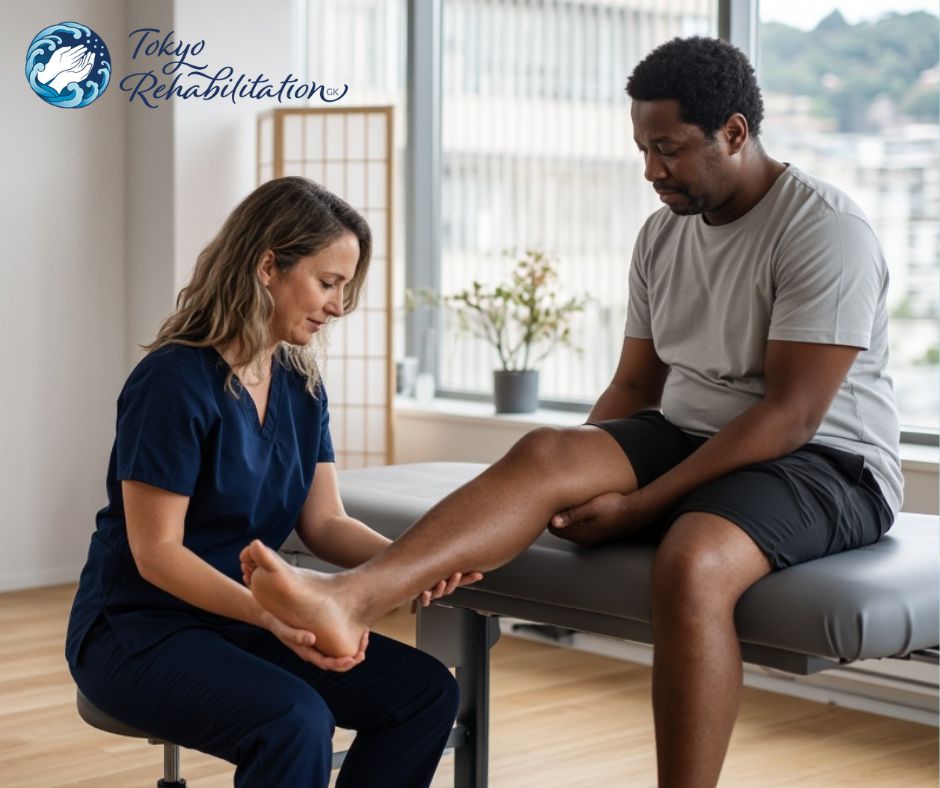
Sometimes, despite your best efforts, the pain just won’t go away. If that happens, you should consider seeing a physical therapist. Look for one who specializes in running injuries or plantar fasciitis. If you don’t have a recommendation, don’t worry. Our team at Tokyo Rehabilitation has helped countless runners and walkers with similar issues.
Here is why you should consider coming to see us.
No Doctor's Prescription Needed
Many physical therapy practices in Tokyo require a doctor’s prescription. At Tokyo Rehabilitation, you can book an appointment on your own. You do not need to see a doctor first. This simplifies the process and gets you help faster.
Knowledgeable, English-Speaking Physical Therapists
Our physical therapists are trained in the latest methods and techniques. They also understand the needs of the international community. Your therapist will work one-on-one with you. They will address your unique concerns. You will never feel rushed or feel like you are not getting personalized care.
Effective Treatment
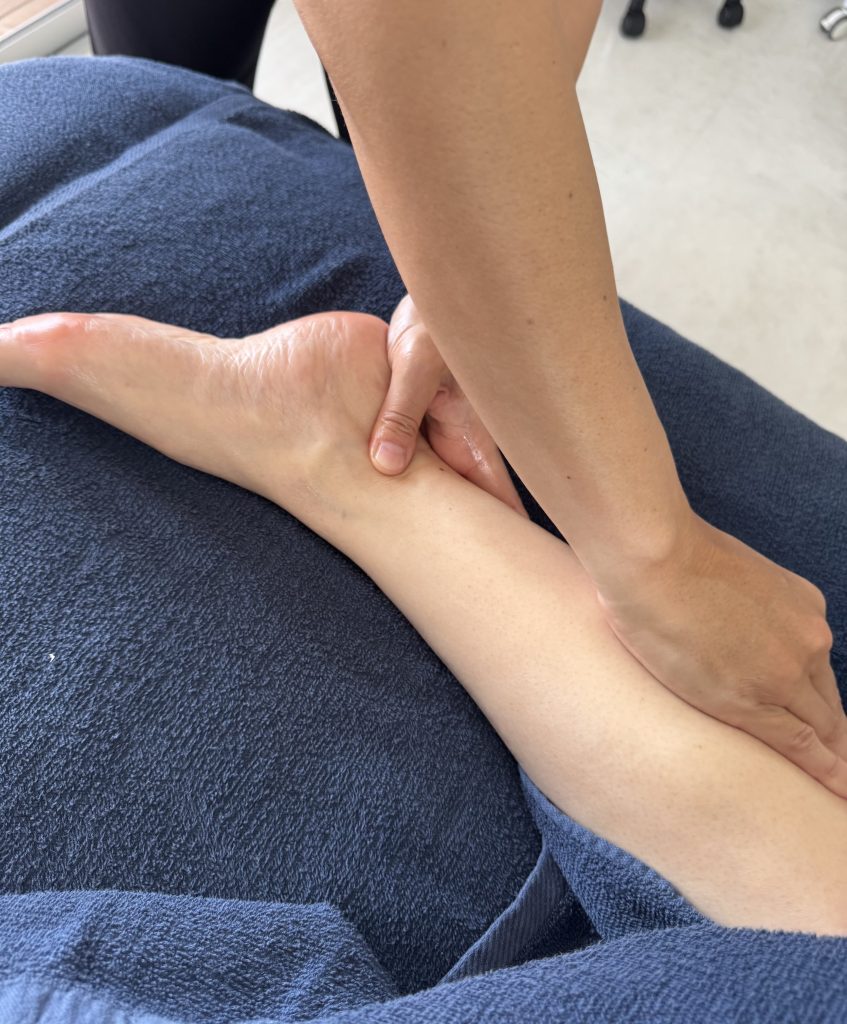
At Tokyo Rehab, we strongly believe in the benefits of hands-on therapy. Mobilization techniques can relieve muscle tension, improve range of motion, and promote healing. A physical therapist will create a plan for you. This often includes hands-on therapy, stretching, and strengthening exercises.
When you have plantar fasciitis, you need to find the root cause. Plantar fasciitis rarely occurs in isolation. Your physical therapist will take a holistic approach. They will address your individual needs. They may use taping, mobilization, and other techniques to reduce inflammation and support your muscles.
Should I See an Osteopath for Heel Pain?
The Tokyo Rehabilitation team also includes skilled osteopaths. The hands-on, holistic approach of osteopathy can be key for some people. It may unlock the root cause of their pain and tension.
Some Information About Healthcare In Tokyo
It’s important to keep a few things in mind about healthcare in Tokyo. Most English-speaking physical therapy practices are private facilities. They are not covered by the Japanese National Health Insurance. However, we are an approved facility for TRICARE. This is the health care program for U.S. military members. We can also provide the necessary documentation so you can file a claim with your private or international insurance company.
Frequently Asked Questions About Heel Pain
How can I tell if my pain is from plantar fasciitis or something else?
If you feel a sharp, stabbing pain on the bottom of your heel when you first stand up, it is likely plantar fasciitis. This pain usually goes away as you walk around. If you are unsure, you should see a medical professional.
Is it bad to keep walking if I have heel pain?
If you have a lot of heel pain, you should ease off on your walking. Walking with pain will only damage the inflamed tissues more. It will also delay the healing process. You can continue walking as tolerated. However, if it interferes with your daily activities, it’s time to talk to a physical therapist. Consider taking the train or a taxi to work until the pain subsides.
Do I need a doctor’s referral to see a physical therapist?
You do not need a referral to see a physical therapist at Tokyo Rehabilitation. You can contact us directly.
Is physical therapy covered by Japanese National Health Insurance?
Physical therapy at our clinic is not covered by the Japanese National Health Insurance. We are a private clinic. However, we provide documents for you to submit to your insurance company for reimbursement.
What should I do first for foot pain?
Your first step is to get the right footwear. You should also limit barefoot walking at home. A good self-care measure is to roll a frozen water bottle under your foot. This can reduce inflammation and loosen tight muscles.
What makes an English-speaking physical therapist in Tokyo different?
Clear communication is essential for effective treatment. When you speak the same language as your therapist, you can ask questions easily. You can also follow medical advice properly. This leads to a faster recovery and better outcomes.
Final Notes
Moving to Tokyo is an exciting time. Your feet should be able to keep up with all the adventures this city offers. The sudden jump in activity is a big adjustment for most newcomers. Experiencing heel pain as a result is very common.
The good news is that it is often easy to fix. Choose the right support, listen to your body, and seek medical care when needed. By doing this, you can continue walking pain-free for years. If the pain persists, we recommend seeking treatment from an English-speaking physical therapist. They can help you get back to doing the things you love.
About Tokyo Rehabilitation
Founded by Mari Gish, PT, Tokyo Rehabilitation has served the English-speaking community in Japan for over 40 years. With state-of-the-art clinics in Shirokane, Minato-ku (Tokyo) and Kadena (Okinawa), our team of U.S.- and Japan-licensed physical therapists, osteopaths, and Pilates specialists provides compassionate, 1-on-1 rehabilitation and holistic wellness support.
We specialize in orthopedic and sports rehabilitation, Men and Women’s Pelvic Health, pre- and postnatal care, pediatric physical therapy, neurological recovery, specialized manual care, osteopathic techniques, and sympathetic nervous system downregulation. We accept international insurance policies and serve as an overseas Tricare provider.
Navigating a foreign healthcare system doesn’t have to mean compromising on the quality or style of your recovery. While Japanese National Health Insurance clinics offer an accessible option for quick, passive relief, private 1-on-1 physical therapy/physio bridges the cultural and linguistic gap for foreign residents who need comprehensive, active rehabilitation. By understanding how both models operate, you can confidently choose the pathway that best fits your specific injury, lifestyle goals, and peace of mind. If you are ready to tackle pain at its root with personalized, English-speaking care in Tokyo or Okinawa, reaching out to a dedicated physical therapy team is your best first step toward living fully and pain-free in Japan.
To learn more and schedule an appointment:
- Visit our website and book your appointment today so we can hear your story, assess your movement, and design a plan tailored to you. Tell us briefly what you are dealing with, and we will help match you with the right clinician.
- Call us directly; for all appointments, please call 03-3446-1682 or email us at info@tokyorehab.com.
- Bring your questions. We will explain our findings in clear language and discuss how manual therapy, exercise, and lifestyle changes can work together for you.
- Tokyo Clinic: NIC Haimu Bldg, Suite 504, 3-4-1 Shirokane, Minato-ku, Tokyo 108-0072
- Okinawa Clinic: Lagoon Palace 4th Floor, 6 Chome-22-13 Mizugama, Kadena, Okinawa 904-0204
- Yokota Clinic: Tokyo 697-22 Fussa, Fussa-shi Tokyo