
How Does Physical Therapy Work in Japan?
Navigating physical therapy in Japan requires understanding two distinct healthcare pathways: Japanese National Health Insurance (NHI) orthopedic clinics and private 1-on-1 physical therapy practices.
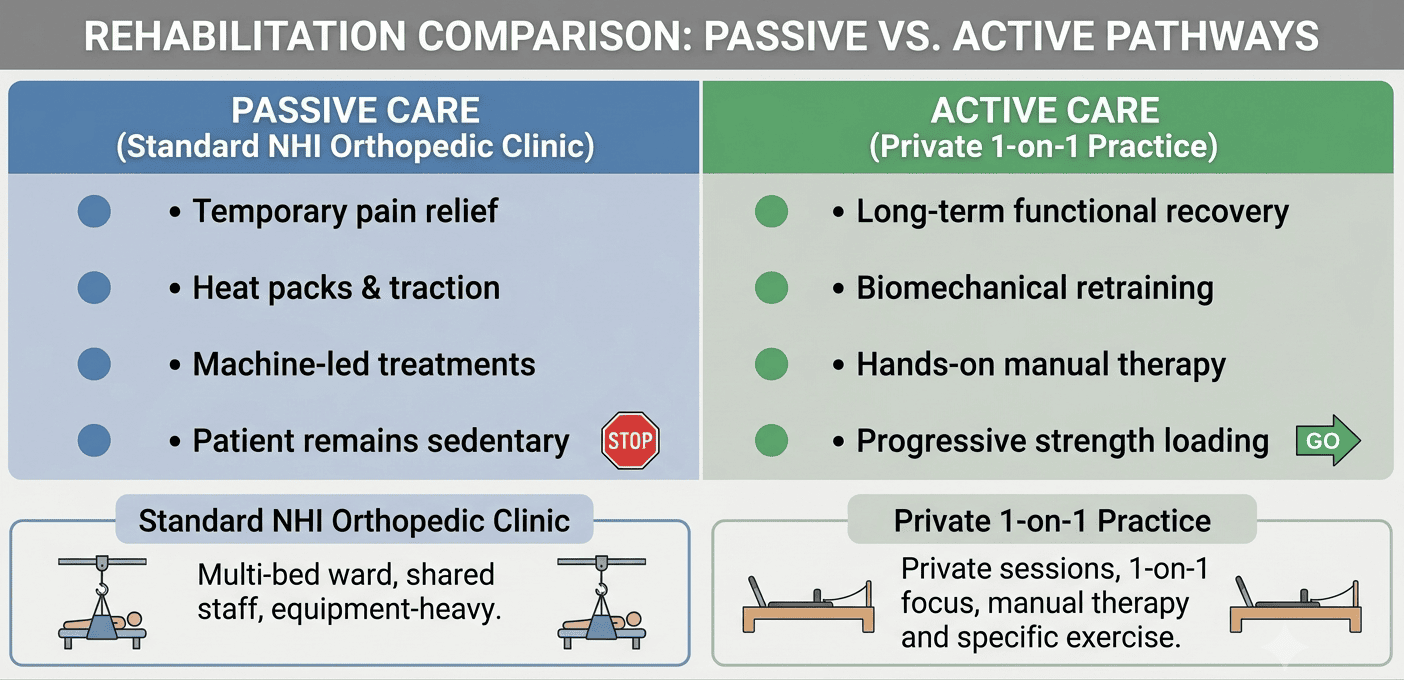
Standard Japanese orthopedic clinics focus on rapid, high-volume care—often utilizing passive modal therapies like electrical stimulation or hot packs alongside short 10-to-20-minute physical therapy sessions. In contrast, private practices provide dedicated 45-to-90-minute 1-on-1 sessions led by bilingual, foreign-licensed physical therapists. Within the private sector, services range from typical international clinics—which focus primarily on exercise-based sports rehabilitation—to specialized practices that integrate advanced manual therapies, osteopathic techniques, sympathetic nervous system downregulation, and holistic wellness offerings.
Foreign residents in Japan can access both systems. Japanese insurance clinics offer low out-of-pocket costs, while private clinics offer comprehensive care, direct English communication, personalized treatment plans, and coverage options through international insurance providers or Tricare.
Care Pathways Vary: Japan offers public Japanese National Health Insurance (NHI) multi-bed clinics as well as private 1-on-1 practices. Private options range from typical international physio clinics—which focus mainly on exercise-based sports rehab—to specialized clinics offering hands-on manual care, osteopathic techniques, and nervous system regulation.
Treatment Focus Differs: NHI clinics focus on passive treatments for high patient volumes. Typical international private practices concentrate on active, exercise-based rehabilitation. Specialized practices combine active rehab with hands-on manual therapies, osteopathic care, and integrated wellness support to address the underlying causes of pain.
Nervous System & Root-Cause Care: Comprehensive recovery often requires more than exercise alone. Specialized practices incorporate approaches designed to downregulate the sympathetic nervous system, helping ease chronic pain and restore balance.
Language Barriers Impact Recovery: Communicating nuance about pain, biomechanics, and daily function requires precise English fluency or specialized medical translation.
Insurance Pathways Vary: Japanese NHI covers local orthopedic clinics. Private international insurance plans (such as Cigna and Aetna International) as well as U.S. Tricare often cover licensed private physical therapy practices.
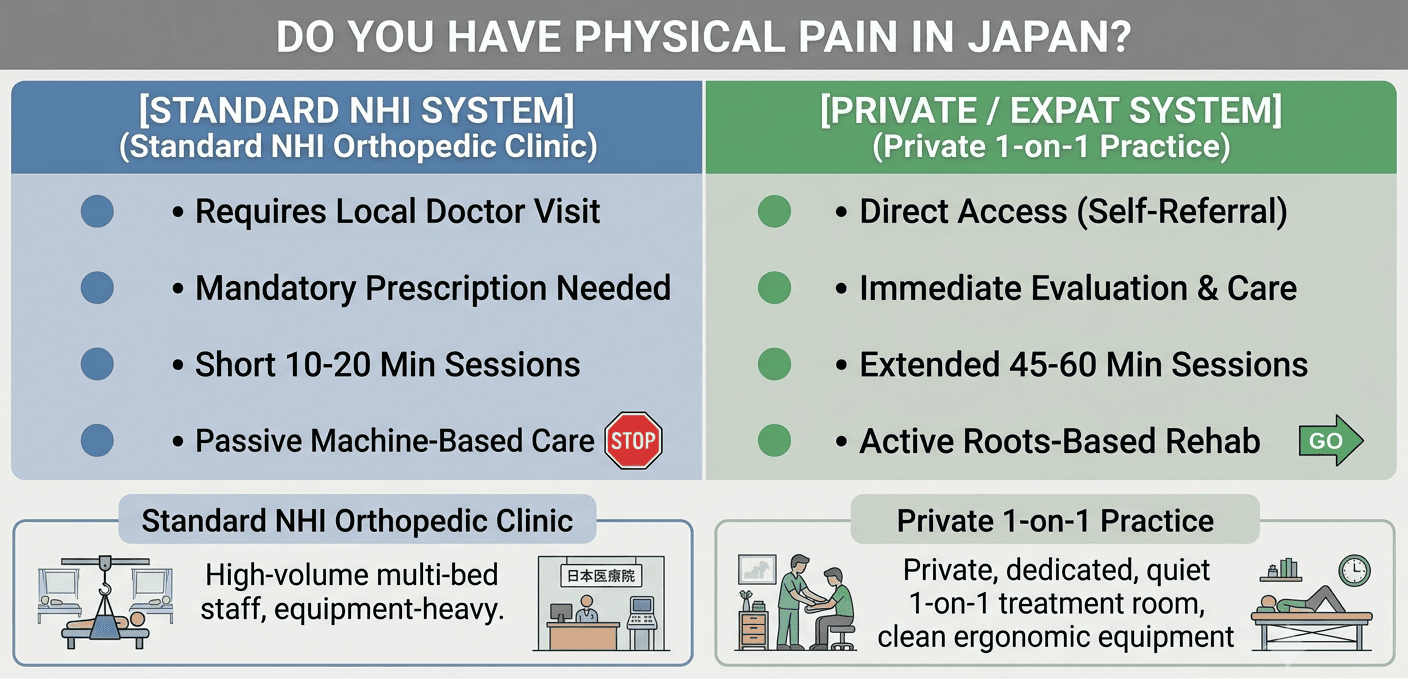
Direct Access Option: Private physical therapy practices in Japan allow self-referral, letting you start treatment immediately without waiting for a local doctor’s note.
Moving to Japan brings incredible lifestyle benefits—from walking through Tokyo’s vibrant neighborhoods to hiking in Nagano or living along Okinawa’s coast. However, managing an injury or chronic pain in a foreign healthcare system can feel overwhelming.
When Western expats, military personnel, and foreign residents seek physical therapy in Japan, they often discover that the local system operates differently from what they experienced back home.
In North America, Europe, and Australia, physical therapy typically involves an extended 1-on-1 evaluation, hands-on manual therapy, and supervised movement retraining. In Japan, physical rehabilitation within the public medical framework developed around a distinct high-volume model designed to serve a rapidly aging population efficiently.
Understanding these differences helps foreign residents choose the right care pathway for their health, schedule, and recovery goals.
When seeking rehabilitation in Tokyo, Okinawa, or other Japanese metropolitan areas, patients navigate between distinct models of care.
Standard Japanese physical therapy takes place inside an orthopedic surgery clinic (Seikeigeka). These medical facilities operate under Japanese National Health Insurance (NHI) or Social Health Insurance (SHI).
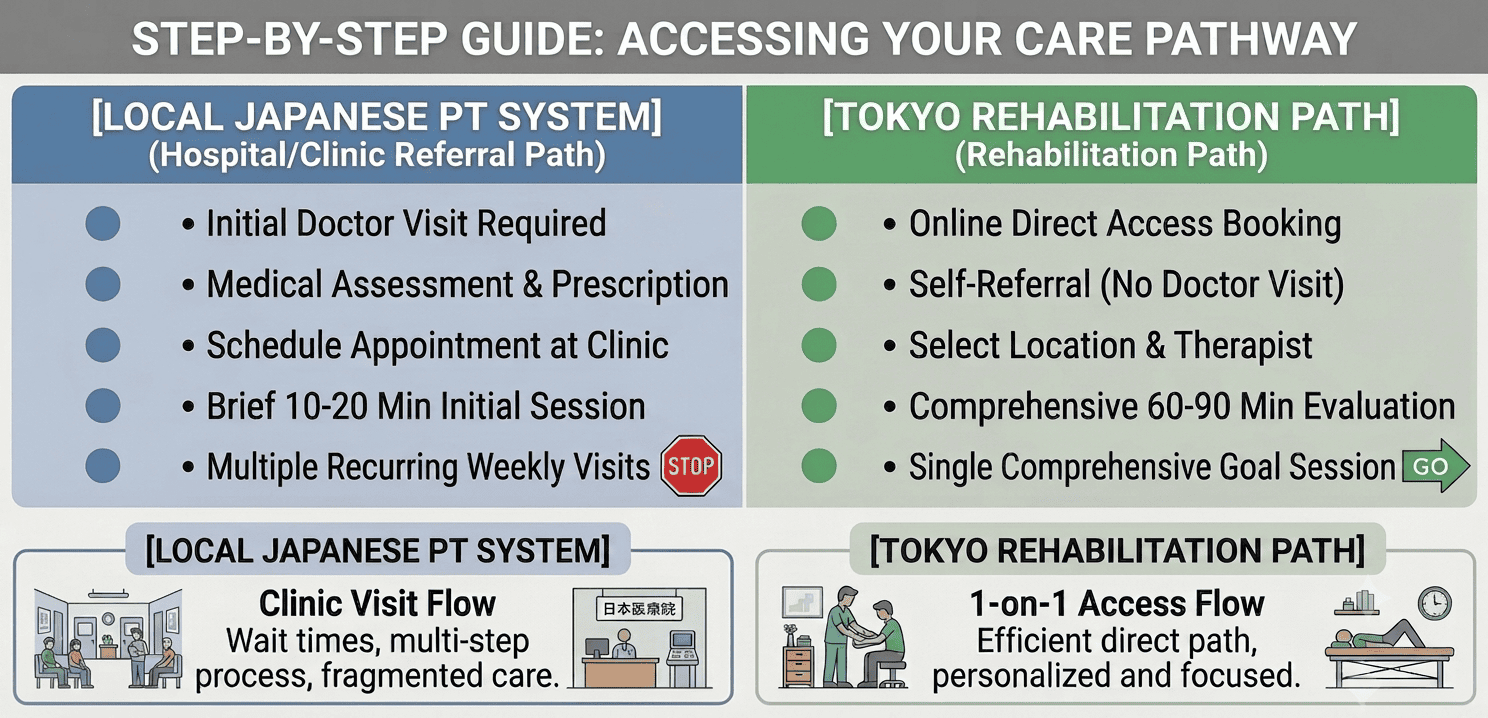
The Patient Flow: You meet briefly with an orthopedic doctor who orders X-rays or imaging. If rehabilitation is prescribed, you are directed to a large, multi-bed therapy room (Rehabili-shitsu).
Session Structure: Patients spend 10 to 20 minutes with a licensed physical therapist. The rest of the visit involves unsupervised passive machines, such as traction tables, infrared lamps, or electrical stimulation devices (Low-Frequency Therapy).
Volume and Frequency: Therapists manage multiple patients simultaneously across open treatment beds. Patients often return 2 to 4 times per week for brief sessions.
Cost Structure: Highly affordable out-of-pocket costs under Japanese NHI (typically 10% to 30% co-pay, often ¥1,000 to ¥3,000 per visit).
Private physical therapy clinics operate outside the Japanese national insurance cap to offer Western-style, comprehensive care. However, care models within the private sector differ:
Typical International Clinics: Focus primarily on extended, 1-on-1 exercise-based sports rehabilitation, functional movement retraining, and strength progression.
Specialized & Integrative Practices: Go beyond standard exercise protocols by combining physical rehabilitation with specialized manual therapies, osteopathic techniques, and approaches designed to downregulate the sympathetic nervous system. These practices frequently integrate wellness offerings to address systemic stress alongside physical rehabilitation.
Session Structure: Full 45-to-90-minute sessions spent entirely 1-on-1 with your physical therapist in private treatment rooms.
Cost Structure: Fee-for-service model reimbursed through international health insurance, private expat policies, U.S. Tricare (for military families), or out-of-pocket payment.
The core difference between the systems stems from medical reimbursement rules. Japanese public health insurance caps what clinics can charge per 20-minute physical therapy unit. To keep clinics financially viable, Japanese therapists must see 18 to 24 patients per day.
This high-volume model limits the time a therapist can spend analyzing your gait, assessing joint mobility, or correcting movement patterns.
Private physical therapy clinics operate under a direct care model. Therapists spend a full hour with a single patient, allowing them to perform comprehensive physical assessments, analyze posture, deliver precise hands-on care, and guide movement execution without interruption.
Patients visiting local Japanese orthopedic clinics frequently receive passive modalities:
Traction Therapy: Mechanical pulling on the lumbar or cervical spine.
Thermotherapy: Application of hot packs or far-infrared heat.
Electrical Stimulation: Low-frequency current to temporarily numb pain receptors.
Private practices emphasize active and holistic recovery pathways:
Typical Private Care: Targeted strengthening, loading muscles and tendons, and sports-specific biomechanical retraining.
Specialized Integrative Care: Combines active exercise with specialized manual therapies, osteopathic joint mobilization, sympathetic nervous system downregulation, Reformer Pilates, and integrated wellness offerings to promote lasting recovery.
Navigating insurance reimbursement for medical care in Japan depends on your visa status, employment, and policy type.
Option A: Japanese National Health Insurance (NHI)
If you reside in Japan long-term, you pay into National Health Insurance (Kokumin Kenkō Hoken) or Employees’ Health Insurance (Shakai Hoken).
Option B: International Private Medical Insurance (IPMI) & Expat Policies
Expats employed by international corporations, foreign embassies, or global companies often carry international policies (such as Cigna Global, Aetna International, Bupa, or Allianz).
Option C: U.S. Military Tricare Overseas
Service members, contractors, and military families stationed in Tokyo or Okinawa (such as Kadena Air Base or Camp Foster) rely on Tricare Overseas.
In Japanese NHI clinics: Sports injuries are often managed conservatively with rest, ice, topical anti-inflammatory patches (Shippu), and short stretching routines.
In Private Practice: Sports physical therapy focuses on biomechanical analysis, eccentric load training, kinetic chain alignment, and return-to-sport testing.
In Japanese Medical Practice: Post-partum care in Japan traditionally emphasizes hospital rest (Ansei). Internal pelvic floor muscle evaluation and specialized physical therapy are rarely integrated into standard gynecological follow-ups.
In Private Practice: Specialized pelvic floor physical therapists provide internal and external muscular assessments, biofeedback, tailored core retraining, and safe return-to-exercise plans for new mothers and women at all life stages.
In Japanese Medical Practice: Japan excels at inpatient post-acute stroke rehabilitation in specialized rehab hospitals. However, once discharged to outpatient care, session length and long-term maintenance therapy under insurance become limited.
In Private Practice: Outpatient neurological physical therapy provides sustained, one-on-one motor learning, balance retraining, and functional mobility practice needed to maintain independence.
In Japanese NHI Clinics: Standard Japanese physical therapy education focuses heavily on basic range-of-motion and exercise instruction. Specialized manual therapy techniques are rarely available in high-volume clinics.
In Typical International Clinics: Focus centers primarily on active exercise protocols, loading routines, and movement assessments.
In Specialized Practices: Advanced hands-on methods—such as Osteopathy, visceral mobilization, techniques to downregulate an overactive nervous system, and integrated wellness strategies—are combined with active rehabilitation to resolve complex, lingering pain.
Mistake 1: Expecting a 60-Minute Hands-On Session at an NHI Clinic
Many foreign residents book an appointment at a local Japanese orthopedic clinic expecting Western-style physical therapy. They feel disappointed when spending 40 minutes connected to a machine and only 10 minutes with a physical therapist.
Solution: Recognize that Japanese insurance clinics use a high-volume, passive model. If you require dedicated 1-on-1 manual care, seek a private practice.
Mistake 2: Stopping Rehabilitation Too Early Due to Language Frustration
Expats often abandon physical therapy because they cannot communicate their pain symptoms or understand their home exercises in Japanese.
Solution: Choose an English-speaking clinic where you can freely express your concerns and receive clear, written home exercise programs in English.
Mistake 3: Relying Solely on Pain-Relieving Patches (Shippu)
Japanese orthopedic clinics frequently prescribe medicated pain patches (Shippu) as a primary treatment. While patches offer temporary pain relief, they do not correct underlying biomechanical weakness, joint stiffness, or movement dysfunction.
Solution: Combine temporary symptom relief with active, load-based physical rehabilitation, hands-on manual therapies, and wellness support.
Mistake 4: Assuming Private Physical Therapy Isn’t Covered by Insurance
Many expats assume private clinics are strictly out-of-pocket expenses.
Solution: Check your international insurance or Tricare policy. Many global health plans reimburse care delivered by licensed, foreign-trained physical therapists in Japan.
FAQ 1: Do I need a doctor’s referral to see a physical therapist in Japan?
Answer: In the Japanese public healthcare system (NHI), you must see a Japanese orthopedic doctor first to receive a physical therapy prescription. However, in private physical therapy practices, direct access is allowed. You can self-refer and schedule an evaluation immediately without visiting a doctor first.
FAQ 2: Is physical therapy in Japan covered by Japanese National Health Insurance (NHI)?
Answer: Japanese NHI covers physical therapy performed inside registered Japanese orthopedic clinics (Seikeigeka). It does not cover private, 1-on-1 physical therapy practices, which operate independently to provide extended, Western-style care.
FAQ 3: How long do physical therapy sessions last in Japan?
Answer: In Japanese public insurance clinics, therapist-led care typically lasts 10 to 20 minutes, followed by machine-based treatments. In private physical therapy practices, sessions last 45 to 90 minutes, spent entirely 1-on-1 with your therapist.
FAQ 4: Can U.S. military personnel and dependents use Tricare for physical therapy in Japan?
Answer: Yes. Authorized private physical therapy clinics in Tokyo and Okinawa coordinate with Tricare Overseas to provide covered physical therapy for military service members, contractors, and dependents.
FAQ 5: What is the difference between physical therapy, Japanese Seitai/Anma, and typical international clinics?
Answer: A physical therapist (Rikagakuryōhōshi) is a medically licensed healthcare professional holding a university degree in physical therapy, human anatomy, and biomechanics—unlike Seitai (body realignment) or Anma (traditional massage), which are non-medical alternative or relaxation therapies that do not conduct clinical orthopedic evaluations.
Within physical therapy, approaches differ significantly. Typical international clinics focus primarily on 1-on-1 exercise-based sports rehabilitation and strength loading. Specialized practices go beyond standard exercise routines to incorporate hands-on manual therapies, osteopathic techniques, sympathetic nervous system downregulation, and integrated wellness offerings to treat complex and underlying causes of pain.
FAQ 6: How many physical therapy sessions will I need?
Answer: Because private practices deliver focused, 60-minute active sessions, patients often achieve their rehabilitation goals in fewer total visits—typically 4 to 8 sessions combined with a targeted home exercise routine. Public insurance clinics may recommend 2 to 3 short visits per week over several months.
FAQ 7: Do physical therapists in Tokyo speak English?
Answer: While therapists at standard Japanese insurance clinics primarily speak Japanese, specialized international clinics employ bilingual or native English-speaking physical therapists trained in the U.S., Japan, or Western healthcare systems.
FAQ 8: Can I get physical therapy in Japan for post-partum pelvic floor recovery?
Answer: Yes. While post-partum pelvic floor physical therapy is uncommon in standard Japanese public hospitals, specialized private practices offer comprehensive pelvic floor evaluations, diastasis recti rehab, and post-natal core conditioning in English.
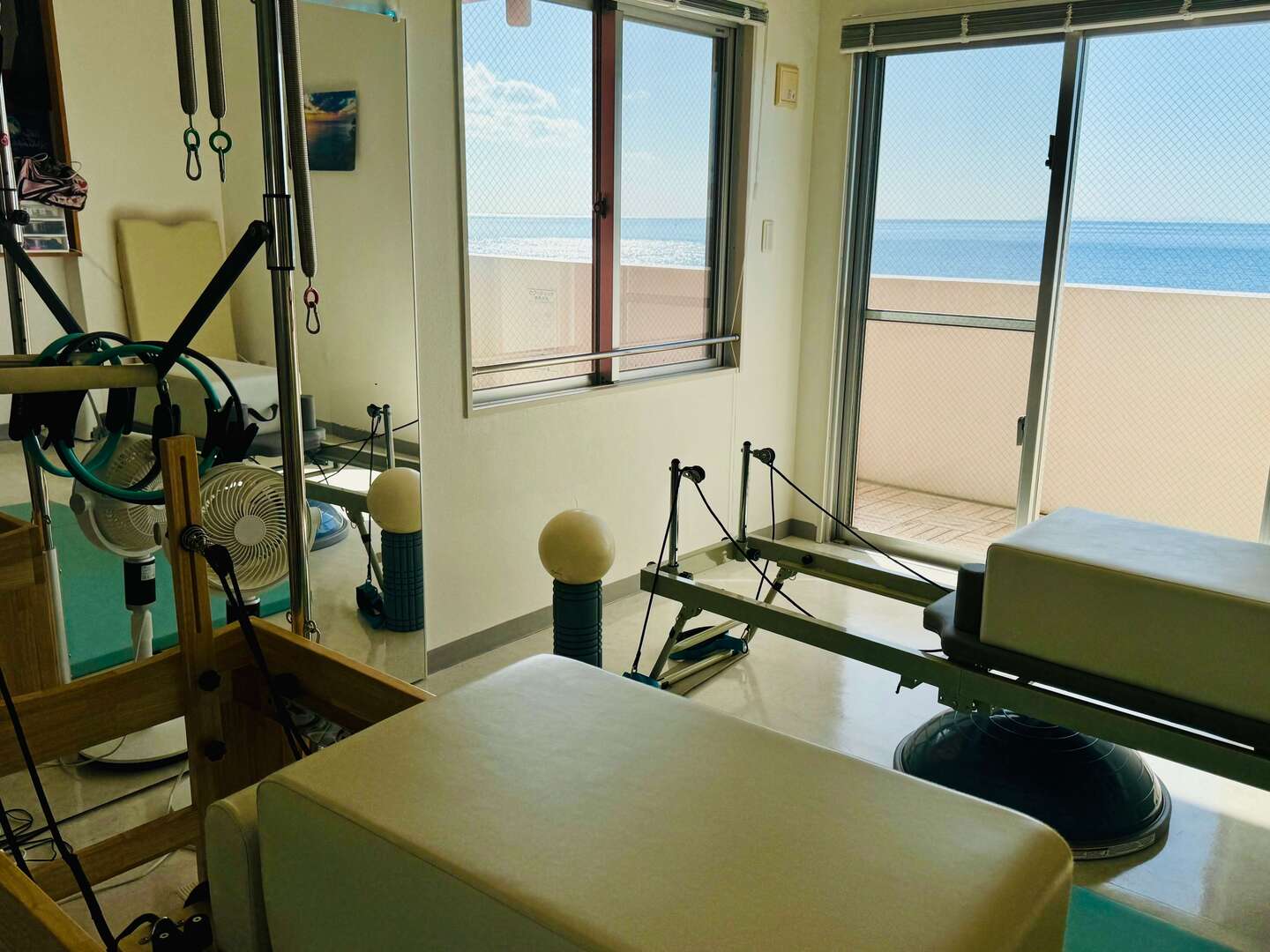
Founded by Mari Gish, PT, Tokyo Rehabilitation has served the English-speaking community in Japan for over 40 years. With state-of-the-art clinics in Shirokane, Minato-ku (Tokyo) and Kadena (Okinawa), our team of U.S.- and Japan-licensed physical therapists, osteopaths, and Pilates specialists provides compassionate, 1-on-1 rehabilitation and holistic wellness support.
We specialize in orthopedic and sports rehabilitation, Men and Women’s Pelvic Health, pre- and postnatal care, pediatric physical therapy, neurological recovery, specialized manual care, osteopathic techniques, and sympathetic nervous system downregulation. We accept international insurance policies and serve as an overseas Tricare provider.
Navigating a foreign healthcare system doesn’t have to mean compromising on the quality or style of your recovery. While Japanese National Health Insurance clinics offer an accessible option for quick, passive relief, private 1-on-1 physical therapy bridges the cultural and linguistic gap for foreign residents who need comprehensive, active rehabilitation. By understanding how both models operate, you can confidently choose the pathway that best fits your specific injury, lifestyle goals, and peace of mind. If you are ready to tackle pain at its root with personalized, English-speaking care in Tokyo or Okinawa, reaching out to a dedicated physical therapy team is your best first step toward living fully and pain-free in Japan.
To learn more and schedule an appointment:
If you enjoyed this article, please also see: Comprehensive Guide: What Causes Lower Back Pain?