
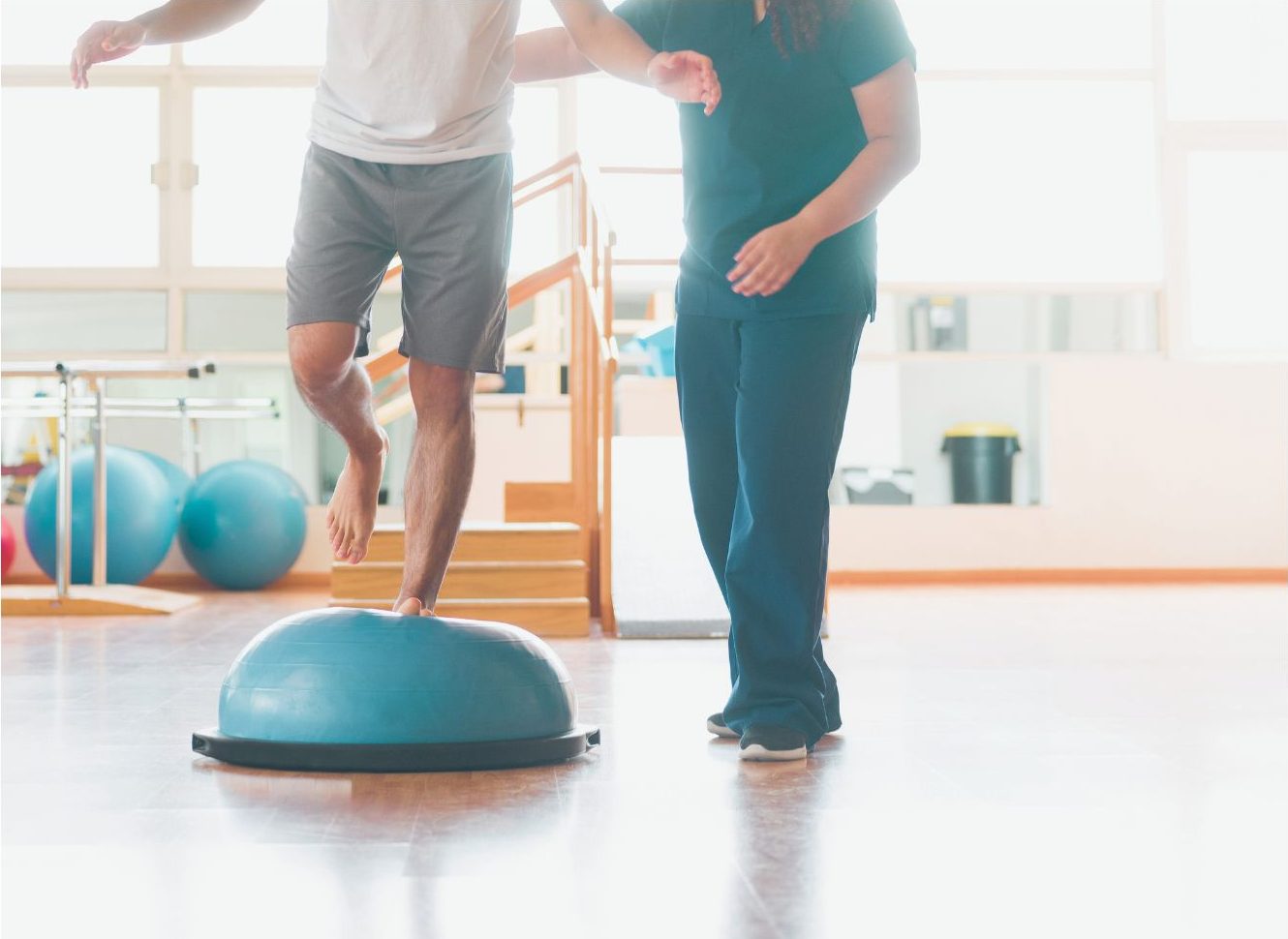
Whether you’re taking a stroll in the park or simply standing still, your body is constantly working behind the scenes to keep you balanced. Balance isn’t just one sense—it’s a team effort. Your brain, eyes, inner ears, and even your neck are in constant conversation to help you stay steady and oriented. At Tokyo Rehabilitation, where rehabilitation and neuro-vestibular care are among the services offered, this interplay is part of what they help clients understand and improve.
In this thorough review, we’ll break down how these systems work together. You’ll get a clear and enjoyable explanation of the science—and better appreciate how physical therapy supports and enhances this teamwork.
Balance isn’t one thing; it’s a complex conversation between multiple systems.
At its simplest, balance is your body’s ability to stay upright and oriented in space. The brain is the central decision-maker, but it relies on a constant flow of information from your eyes, inner ears, and proprioceptors (sensors in joints and muscles). When these systems work together smoothly, you can walk, turn your head, and move confidently without thinking too hard about it. However, when the communication is disrupted, you might feel dizzy, off-balance, or unsteady.
At Tokyo Rehabilitation, vestibular care is one of the treatments—showing they recognize how crucial this sensory coordination is for quality of life and physical functioning.
Balance is much more than just “not falling over.” It’s an ongoing internal process that happens even when you’re standing still. Your brain constantly evaluates sensory input and adjusts posture and movement automatically.
Your brain is the master regulator of balance. It takes in information, processes it, and sends out commands to keep you upright and coordinated.
When you move your head or body, information from your inner ears, eyes, and body sensors (like in your legs and neck) all reaches your brainstem and cerebellum. These parts of the brain interpret the signals and decide how to adjust muscle tension and eye movements to maintain balance.
Your brain doesn’t always rely on every system equally. In darkness, visual cues become less useful, so the brain depends more on your inner ear and proprioceptors. In contrast, when walking on uneven ground in bright light, the brain may weigh visual and vestibular signals more heavily. This flexibility helps keep you balanced in a wide range of environments.
In physical therapy settings like those at Tokyo Rehabilitation, therapists help clients retrain these neurological processes through targeted exercise and movement therapy, especially when there’s dysfunction.
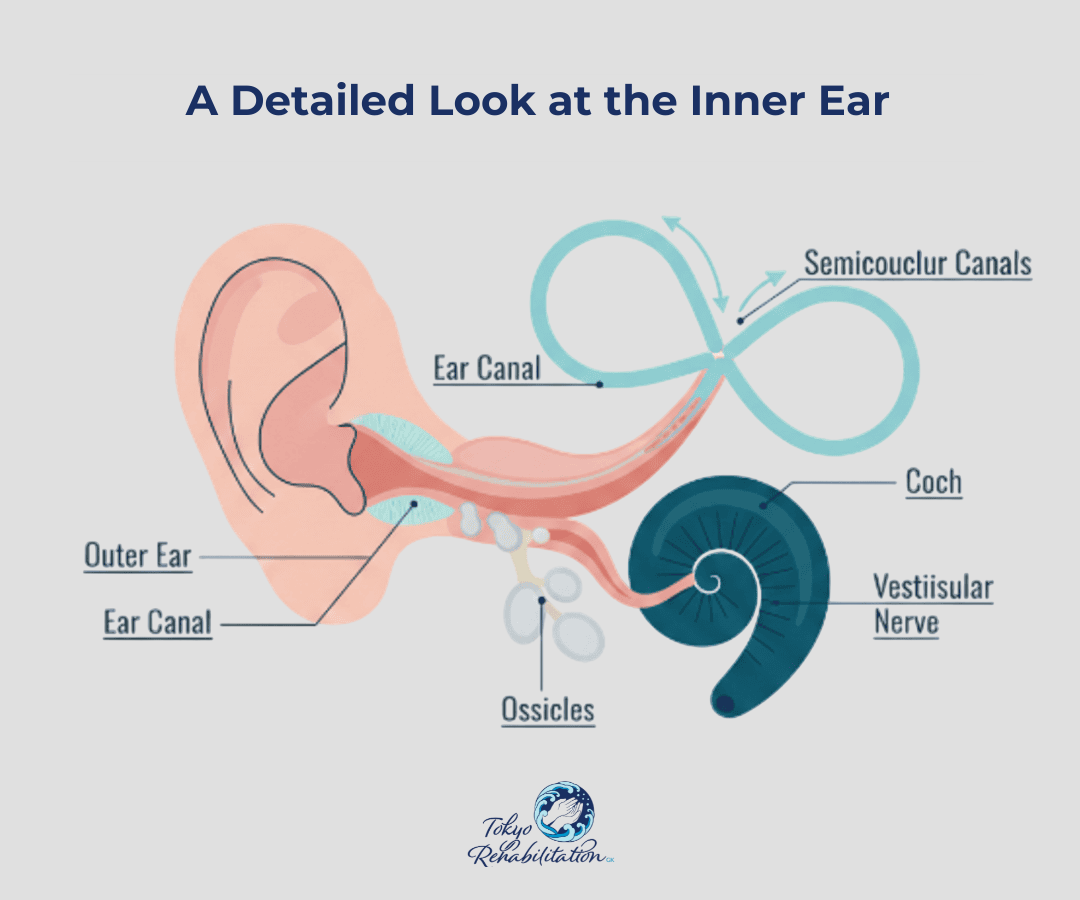
Inside your skull, deep within the temporal bone, lies a small but powerful system called the vestibular system—the primary internal “balance sensor.”
This structure includes semicircular canals and otolith organs (the utricle and saccule), all filled with fluid and lined with tiny sensory hairs. These organs detect head movement and the position relative to gravity. When you move, the fluid shifts and bends these hairs. This generates electrical signals that are sent to your brain for interpretation.
The specific design of these canals—oriented in different planes—allows your inner ear to detect motion in all directions:
No matter how your head moves, some part of the vestibular apparatus is active. This rich sensory data contributes greatly to your sense of balance.
Your vision isn’t only for seeing the world—it plays a critical role in balance too.
Your eyes tell your brain where you are in space and whether you’re moving relative to your surroundings. When you’re walking on an uneven surface, for instance, visual cues help your brain predict and adjust your posture before you even feel the ground.
There’s also a special reflex called the vestibulo-ocular reflex (VOR). This reflex stabilizes your vision even when your head is moving. For example, when your head turns to the right, your eyes automatically move slightly to the left so your gaze stays focused on what you were looking at—preventing the world from blurring or bouncing around.
Physical therapy often includes exercises to improve or retrain this reflex, especially after dizziness or balance disorders.
Proprioceptors are sensors in your muscles, tendons, and joints. They tell your brain where your body parts are without you having to look. These signals are essential for posture and movement coordination.
Even the neck contributes crucial information. Neck muscles contain proprioceptors that tell the brain how the head is oriented relative to the body. This becomes especially important when your head turns quickly or when your eyes are busy tracking something.
These senses work in tandem:
All of this data flows to your brain, which seamlessly blends it into a reliable sense of balance.
Sometimes the brain receives conflicting messages. That’s when we might feel unsteady, dizzy, or disoriented.
A good example is sitting on a stopped train while another train next to you starts moving. Your eyes might signal motion, while your inner ear and body sensors say you’re still. That conflict tricks your brain and can make you feel strange or off-balance.
This conflict can also trigger motion sickness, vertigo, or imbalance, especially if there is dysfunction in the vestibular system. Physical therapists trained in vestibular rehabilitation can help retrain the brain to reinterpret or adapt to these signals over time through specific exercises.

Balance is much more complex than you might think. It’s a dynamic conversation between sensory systems, nerves, and muscles—all orchestrated by the brain.
At clinics like ours, this understanding guides how therapists help people recover from dizziness, balance disorders, neck injuries, and other conditions that affect the nervous system and movement. Our approach combines deep clinical knowledge with personalized therapy to help clients regain confidence in their balance and movement.
If you’ve ever felt dizzy after spinning, struggled to walk in the dark, or just wondered how balance works so seamlessly, now you know it’s not one sense but a finely tuned partnership. From the fluid movement in your inner ear to how your eyes and neck communicate with your brain, balance is nothing short of a symphony of sensors.
And with dedicated therapy, that symphony can be retuned when injuries or dysfunctions throw it off.
How does Tokyo Rehabilitation address balance problems?
At Tokyo Rehabilitation, balance is assessed as a coordinated function of the brain, eyes, inner ear, neck, and body. Rather than treating symptoms alone, we identify how these systems interact and tailor treatment accordingly.
What balance-related conditions do you treat?
We treat dizziness, vertigo, and general unsteadiness.
Balance issues related to neck pain, concussion, neurological conditions, and postural dysfunction are also commonly addressed.
Do you provide vestibular rehabilitation in Tokyo?
Yes.
Vestibular rehabilitation is offered to help improve communication between the inner ear and the brain. This therapy is often used for dizziness, vertigo, and balance disorders.
Why is the neck evaluated during balance treatment?
The neck plays an important role in spatial awareness and balance.
Restricted movement or altered sensory input from the neck can contribute to dizziness or instability. Neck assessment and treatment are included when clinically appropriate.
How do the eyes relate to balance therapy?
Vision provides key spatial information to the brain.
Eye and head coordination may be assessed and trained to support balance and movement control. This is particularly relevant for post-concussion and vestibular conditions.
What happens during a balance assessment?
Your therapist will assess posture, gait, head and eye movement, strength, and coordination.
This allows us to determine the source of imbalance and develop an individualized treatment plan.
Is treatment hands-on, exercise-based, or both?
Treatment often combines hands-on therapy with targeted exercise.
This approach supports improved mobility, sensory input, and long-term movement control.
Do you treat English-speaking and international clients?
Yes.
Tokyo Rehabilitation regularly works with English-speaking and international residents in Tokyo and Okinawa. Clear explanation and communication are central to our care.
Who should consider balance or vestibular therapy?
Anyone experiencing dizziness, unsteadiness, or difficulty with movement.
Balance therapy may also be helpful following injury, concussion, or persistent neck issues.
How do I know if balance therapy is right for me?
If balance symptoms affect daily activities, a professional assessment is recommended.
Our therapists can help determine whether balance or vestibular therapy is appropriate for your situation.
Balance is not controlled by a single system. It’s the result of ongoing communication between the brain, eyes, inner ear, neck, and body. When these systems work well together, movement feels steady and natural. When they don’t, even simple activities can feel challenging.
Understanding this connection is the first step. The next step is knowing that balance can often be improved with the right support. A careful assessment and targeted therapy can help the nervous system adapt and respond more effectively over time.
At Tokyo Rehabilitation, balance care is approached with attention, clarity, and individual needs in mind. Rather than focusing only on symptoms, therapists look at how the whole system is functioning. This allows treatment to be practical, specific, and appropriate for daily life.
If you’ve noticed dizziness, unsteadiness, or movement that no longer feels reliable, it may be worth exploring further. A professional assessment can help identify what’s contributing to the issue. From there, you can decide on the next steps with confidence.
To learn more and schedule an appointment:
If you enjoyed this article, please also see: Listening With Our Hands: A Different Kind of Manual Therapy